
Alberta Apples & Deep-Dish Apple Pie
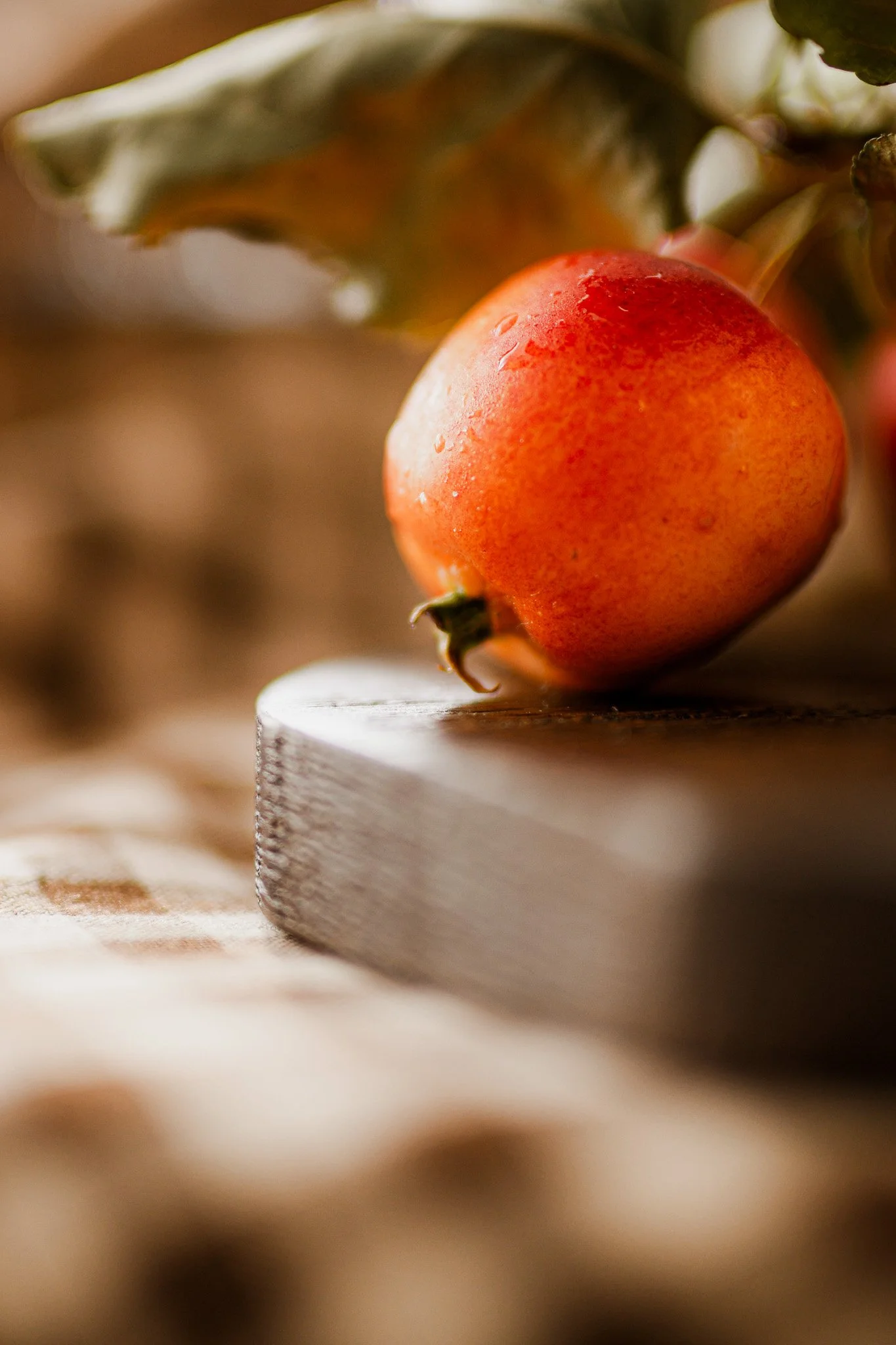
There is something particularly good about an Alberta apple.
I didn’t really know this until I started baking with them.
I am certainly not an apple expert. I couldn’t walk through an orchard and confidently identify every tree, and until fairly recently I couldn’t have told you much about the difference between a Goodland and a Norkent. But I do know pie. And after making apple pies with fruit grown close to home, picked in season and used almost immediately, I have become convinced of one thing:
The best apple pie begins with more than one kind of apple.
Sweet ones. Tart ones. Firm ones that keep their shape in the oven and softer ones that collapse into the spaces between them. Together they make a filling that tastes distinctly of apples rather than simply cinnamon and sugar.
And, as it turns out, the Canadian Prairies have quite an apple story.
Apples on the Prairies
Apples weren’t native to Alberta. Growing the large European-style apples people were accustomed to wasn’t particularly easy here either.
Our winters are long and cold. Spring can arrive late, autumn can come early, and a perfectly lovely stretch of weather can be interrupted by frost. An apple tree growing here has to be able to survive winter first — and then manage to flower, set fruit and ripen it within our relatively short growing season.
Early prairie growers relied heavily on very hardy apples and crabapples. Then came decades of gardeners, farmers, nurserymen and plant breeders saving seedlings, making crosses and selecting the trees that survived.
The result is an extraordinary collection of prairie fruit.
More than 1,000 different apples and crabapples have been recorded as having been grown across the Canadian Prairies since the 1880s. Many have Russian, Canadian and American ancestry, and breeding programs across Western Canada continued selecting for cold hardiness, flavour, fruit size and storage.
That is why our apples can be a little different from the polished supermarket varieties we’re used to seeing.
They’re apples that learned to live here.
So which Alberta apples make a good pie?
For pie, I don’t necessarily want the sweetest apple.
I want flavour, acidity and texture.
Goodland is a wonderful prairie apple to look for — moderately sweet, hardy and good for cooking. Norkent is crisp and juicy and works for both eating and cooking. Parkland is another hardy prairie apple with a lovely sweet-tart character. Haralson is wonderfully useful where you can find it, particularly when you want some tartness. Even some of our little applecrabs can bring tremendous flavour and acidity to a pie.
But my favourite approach isn’t to become too attached to one cultivar.
Ask the orchard what is ripe, what is good for baking and take home a mixture.
That mixture is part of the magic.
A beautiful pie filling isn’t perfectly uniform. Some slices remain intact. Others soften and release their juice. The tart apples temper the sugar. The sweeter apples become almost jammy around their edges.
And when the fruit has been grown nearby and hasn’t spent weeks travelling and sitting in storage, the flavour can be remarkable.
Clara’s Pie
Clara’s apple pie was the one that convinced me. Clara was going away to university and naturally I made her a little pie. I had Alberta orchard apples — a mixture of varieties (don’t ask me what ones tho - I did not pay attention, I only know I had a lovely assortment of mixed apples) — and made them into a deep-dish pie with a flaky bottom crust and a generous crumble top.
It’s loosely connected to my Dutch roots. The Dutch certainly know their way around an apple pie, although this isn’t really a traditional Dutch appeltaart.
It’s more like the pie that happened after those roots travelled to Canada.
Prairie apples, a North American flaky pastry. A deep dish. A buttery crumble piled over everything.
And no cream.
Obviously.
The apples underneath became soft and fragrant but didn’t disappear. There was sweetness and tartness and that almost floral, intensely apple flavour you get from good orchard fruit.
It was exactly what I want apple pie to be.
And then there was Jude’s.
By the time I made Jude’s pie (the boy wanted pie in leiu of a birthday cake.. my kind of kid) the orchard apples were gone.
So I bought apples at the grocery store.
I made essentially the same pie, but this time I scattered sliced almonds through the crumble on top.
The almonds were chef’s kiss - pretty, rustic and crunchy.
They toast while the pie bakes and give the crumble this wonderful crisp, nutty edge. The only trouble is that almonds can go from beautifully toasted to burnt rather quickly, so the pie needs to be loosely tented with foil early enough to protect them.
It was still a very good pie.
But the apple filling wasn’t the same.
And that might be one of my favourite things about cooking seasonally: sometimes you don’t understand what an ingredient contributes until you don’t have it anymore.
The orchard apples had made the pie.
So next autumn, when Alberta apples begin appearing at orchards, farm stands and markets, I’ll be buying more than I think I need.
Some things are worth waiting all year for.
Alberta Orchard Deep-Dish Apple Pie
This is a generous, old-fashioned pie: flaky pastry underneath, a tall mound of apples and buttery crumble over the top.
If you can, use several apple varieties. Choose a combination of tart, sweet and firm baking apples rather than eight identical ones.
Flaky Pie Crust
For one deep-dish bottom crust
1 1/2 cups (190 g) all-purpose flour
1 tbsp sugar
1/2 tsp fine salt
1/2 cup (113 g) very cold unsalted butter, cubed
4–6 tbsp ice water
1 tsp apple cider vinegar
Whisk together the flour, sugar and salt.
Add the cold butter and work it into the flour with your fingertips or a pastry cutter. Stop while there are still plenty of visible pieces of butter — some about the size of peas and a few slightly larger.
Stir the vinegar into 4 tablespoons of ice water. Drizzle it over the flour mixture and toss gently with a fork. Add additional ice water, a teaspoon at a time, only until the dough will hold together when squeezed.
Turn it onto the counter and gently bring it together. Don’t knead it smooth.
Flatten into a disk, wrap and refrigerate for at least one hour.
The secret to flaky pastry
Cold butter and restraint.
Those little pieces of butter are intentional. In the oven, the water contained in the butter turns to steam and helps create the flaky layers we’re after.
Don’t keep adding water until you have a soft, tidy dough. Don’t knead it like bread. And if at any point the butter starts getting soft, put everything back in the refrigerator.
A slightly shaggy cold pastry dough is far more promising than a beautifully smooth warm one.
When you’re ready to assemble the pie, roll the pastry on a lightly floured counter and fit it into a 9-inch deep-dish pie plate. Leave a little overhang and crimp the edge.
Return the crust to the refrigerator while you prepare the apples.
Apple Filling
8–10 medium apples, preferably a mixture of Alberta-grown baking apples
2 tbsp fresh lemon juice
1/2 cup (100 g) brown sugar
1/4 cup (50 g) granulated sugar
3 tbsp all-purpose flour
1 1/2 tsp cinnamon
1/4 tsp nutmeg
1/4 tsp fine salt
1 tsp vanilla
1 tbsp butter, cut into little pieces
Peel and core the apples and slice them approximately 1/4-inch thick.
Toss with the lemon juice, sugars, flour, cinnamon, nutmeg, salt and vanilla. Let them sit for about 10 minutes.
Pile the apples generously into the cold pastry shell. A deep-dish apple pie should look almost ridiculously full before it goes into the oven; the apples will settle considerably as they bake.
Dot with the tablespoon of butter.
Crumble
1 cup (125 g) all-purpose flour
3/4 cup (150 g) brown sugar
1/2 tsp cinnamon
1/4 tsp salt
1/2 cup (113 g) cold unsalted butter, cubed
1/2 cup sliced almonds, optional — but highly recommended
Mix the flour, brown sugar, cinnamon and salt.
Work in the cold butter until you have a mixture of fine crumbs and larger buttery clumps.
Pile the crumble over the apples.
If you’re making Leighton’s version, scatter the sliced almonds over the crumble.
Baking
There is a particular satisfaction in making a pie from scratch.
Flour on the counter. Cold butter under your fingertips. A pile of apples that seems much too large for the dish. Waiting for pastry to rest when it would be easier not to. Waiting again for the finished pie to cool.
None of it is difficult.
It simply asks for a little time.
Maybe that’s why making an apple pie can feel almost pioneer-like now. Not because we’re pretending life used to be simpler — I’m quite sure it wasn’t — but because we’re choosing, for an afternoon, to make something with our own hands that we could easily have bought.
There is pride in that.
So when the Alberta apples arrive, buy a bag from an orchard. Better yet, buy several varieties. Take them home, put some music on and clear the counter.
Make the pastry.
Slice the apples.
Take your time.
Some Sundays are worth making from scratch.
