
The Trouble With Macarons
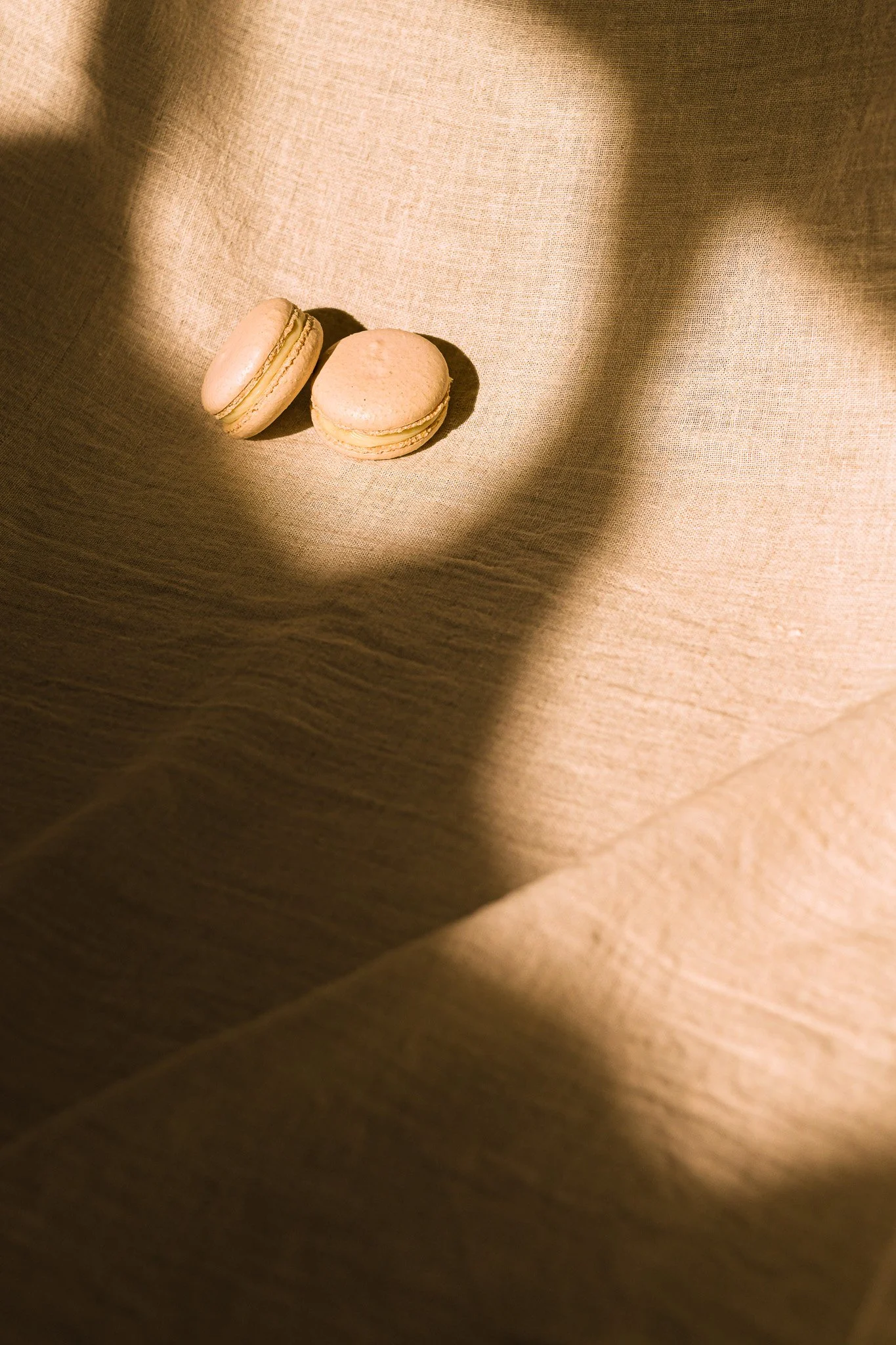
I started making macarons about fifteen years ago, when my kids were little.
I can’t remember exactly what possessed me to try them.
Probably because they were beautiful.
That has gotten me into a lot of things.
Back then I made very simple flavours. Lemon. Raspberry. Pistachio.
Sometimes they worked.
Sometimes they absolutely did not.
And even when they looked right, they didn’t necessarily taste particularly good.
But more often than not, they were okay.
And every once in a while, they were perfect.
Those were the ones that got me.
Tingles
There is a particular feeling I get when I’ve spent an unreasonable amount of time fussing over something and then it actually works.
Tingles!
I don’t know how else to describe it.
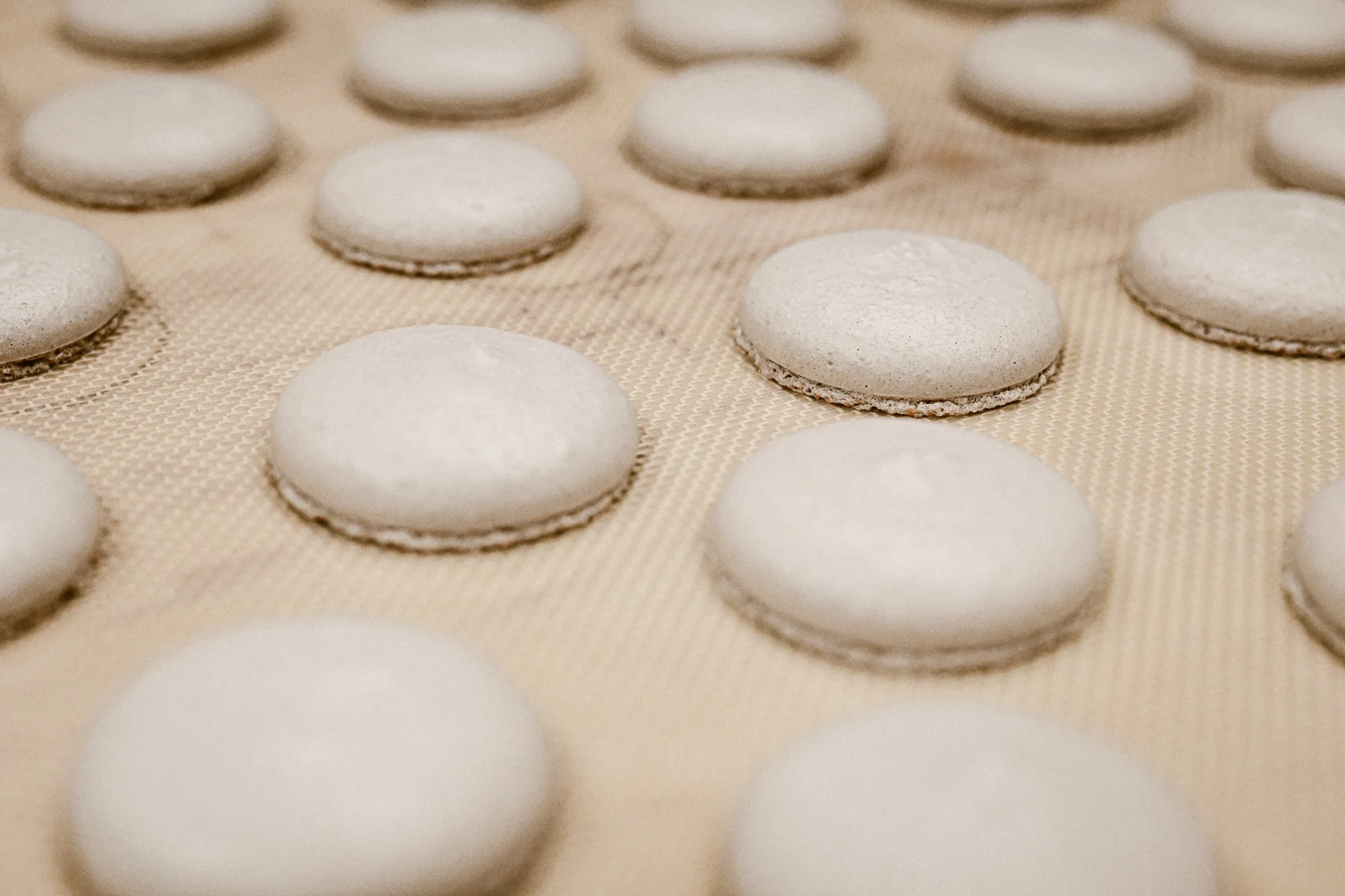
You pull the tray from the oven and there they are.
Smooth little tops.
Ruffled feet.
No cracks.
You lift one from the parchment and the bottom releases perfectly.
You made that.
For something consisting mostly of almonds, sugar and egg whites, a macaron has an astonishing capacity to make you feel accomplished.
Perhaps because they aren’t particularly interested in cooperating.
Macarons are fussy.
You weigh everything.
You sift.
You whip.
You fold the batter just enough — but not too much.
You pipe.
You bang trays on counters.
You wait.
You stare suspiciously at the weather.
You put them in the oven and discover that apparently your oven has developed a personality since yesterday.
And after all of that, they can still crack.
Or lean.
Or stick.
Or have no feet.
Or have enormous feet.
Or look absolutely beautiful and contain a mysterious hollow cavern inside.
Macarons keep you humble.
Why bother?
This is a reasonable question.
There are much easier cookies.
Very good cookies, actually.
You could make a chocolate chip cookie in considerably less time and have a pretty good idea what is going to come out of the oven.
But I think that’s exactly why I’ve kept coming back to macarons.
I like learning difficult things.
More specifically, I like the moment when something difficult starts becoming familiar.
The first time, you’re following every instruction nervously.
Then you make it again.
And again.
Eventually you begin noticing things that aren’t written in the recipe.
You know what the egg whites should look like.
You recognize the way the batter falls from the spatula.
You know when you’ve gone one fold too far.
You learn your oven’s peculiarities.
You stop following a recipe quite so much and start paying attention.
The knowledge moves from the page into your hands.
I love that.
Fifteen years later
I still make macarons.
They’re better now.
Thank goodness.
But what has changed most is that I no longer find the shell itself particularly interesting.
The shell is the technical part.
The flavour is where I get to play.
Blackberry and wine.
Elderflower and honey.
Cola and vanilla.
Orange and olive oil.
Things that taste like a season, a memory or something I became curious about and wanted to see if I could turn into a macaron.
That little almond shell is really just a canvas.
And perhaps that’s why macarons eventually found their way into All the Sundays.
They’re precise, but playful.
Beautiful, but not terribly serious.
They require patience.
They reward attention.
And they leave an enormous amount of room for curiosity.
That sounds rather familiar.
There is pleasure in doing something the hard way
We spend a lot of time trying to make life more efficient.
And mostly, that’s wonderful.
I am very grateful for my dishwasher.
But I don’t think everything needs to be optimized.
Sometimes the inefficient way is the whole point.
Make pastry from scratch.
Grow something from seed.
Mend the sweater.
Learn to use the camera manually.
Make the ridiculous French cookie that may or may not cooperate.
Not because you couldn’t buy it.
Because you want to know how.
There is satisfaction in putting your hands on something difficult and staying with it long enough that one day you realize:
I’m actually quite good at this.
That feeling is hard to buy.
And they are beautiful
Of course, I can’t pretend this is entirely philosophical.
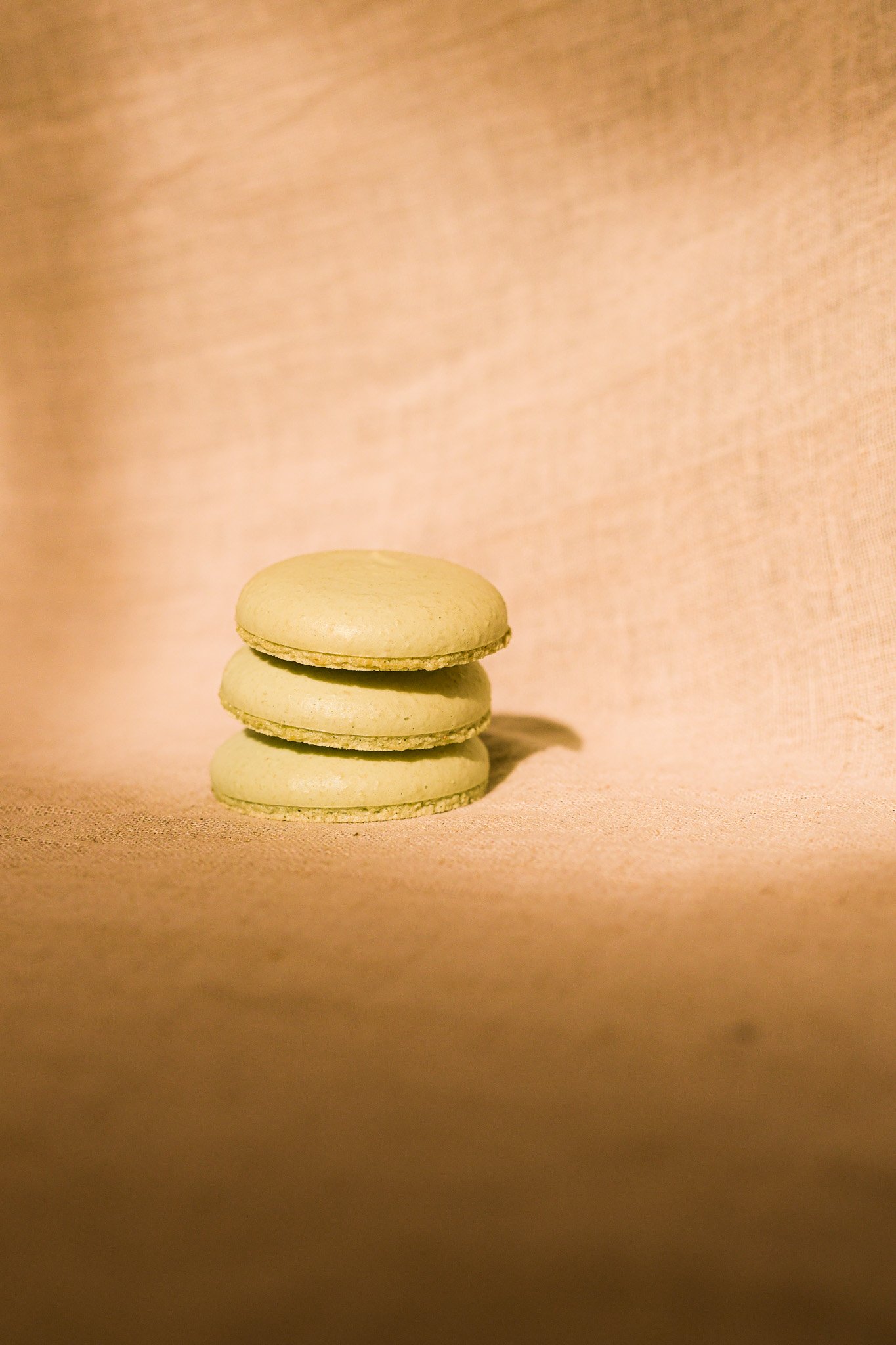
I still love how macarons look.
A little row of them in a box makes me ridiculously happy.
I love choosing their colours.
I love seeing them lined up on a tray before they’re filled.
I love that something so small can be made so carefully.
Fifteen years ago, that was probably enough reason for me to begin.
Today, I think I understand why I stayed.
It wasn’t really the macarons.
It was learning that if I was willing to be bad at something for a while, pay attention, make adjustments and keep going, eventually my hands would know something they hadn’t known before.
And then, every once in a while, I’d open the oven.
Perfect little feet.
Smooth tops.
A beautiful tray of something unnecessarily difficult.
